Training you can do for the rest of your life.
Any programme can produce a twelve-week transformation. Almost none survive a house move, a new job, an injury, or a decade. This path is the one that decides whether the other three ever compound — the structure that keeps training in the week when the week gets hard.
2sessions
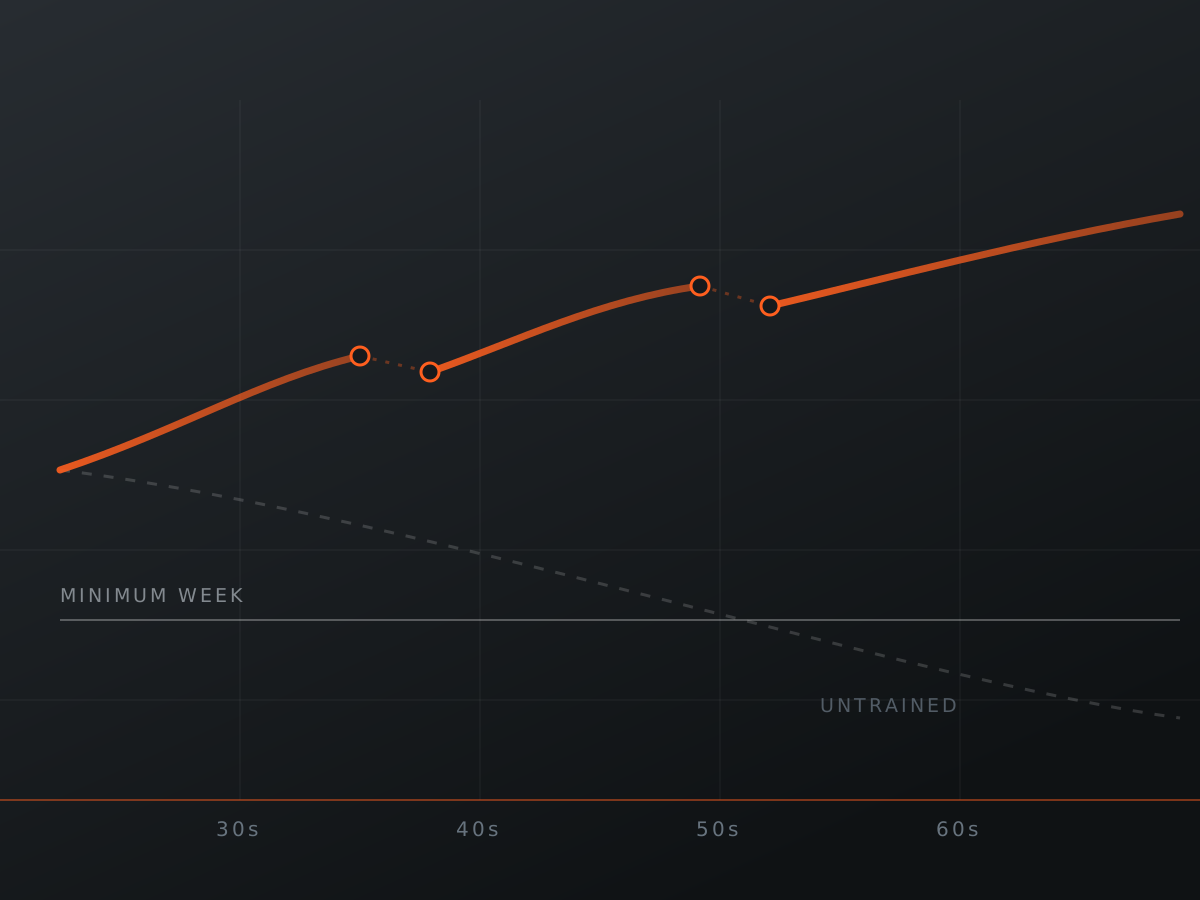
Documented minimum week
10yr horizon
How blocks are planned
1× / quarter
Full reassessment
How this path is programmed.
Design for the bad month
Every programme carries a documented minimum: two sessions, thirty minutes, no equipment beyond bodyweight. It is written at the start, while things are going well, not improvised in the middle of a crisis.
Train the decade you are in
Priorities change: tissue tolerance in your thirties, bone and power in your fifties, balance and grip beyond. The blocks change with them rather than repeating a programme that suited someone else's age.
Coach yourself out of coaching
The goal is that you can write your own block, judge your own load, and know when to back off. Dependence on a coach is a business model, not an outcome.
You will notice it here first.
- Training survives holidays, deadlines and moves.
- You can explain why this week looks the way it does.
- Stopping for a fortnight is a pause, not a collapse.
Start with the screen, not the programme.
The assessment tells us whether Long Game is actually your first block — sometimes it is not, and we would rather find that out in ninety minutes than in twelve weeks.