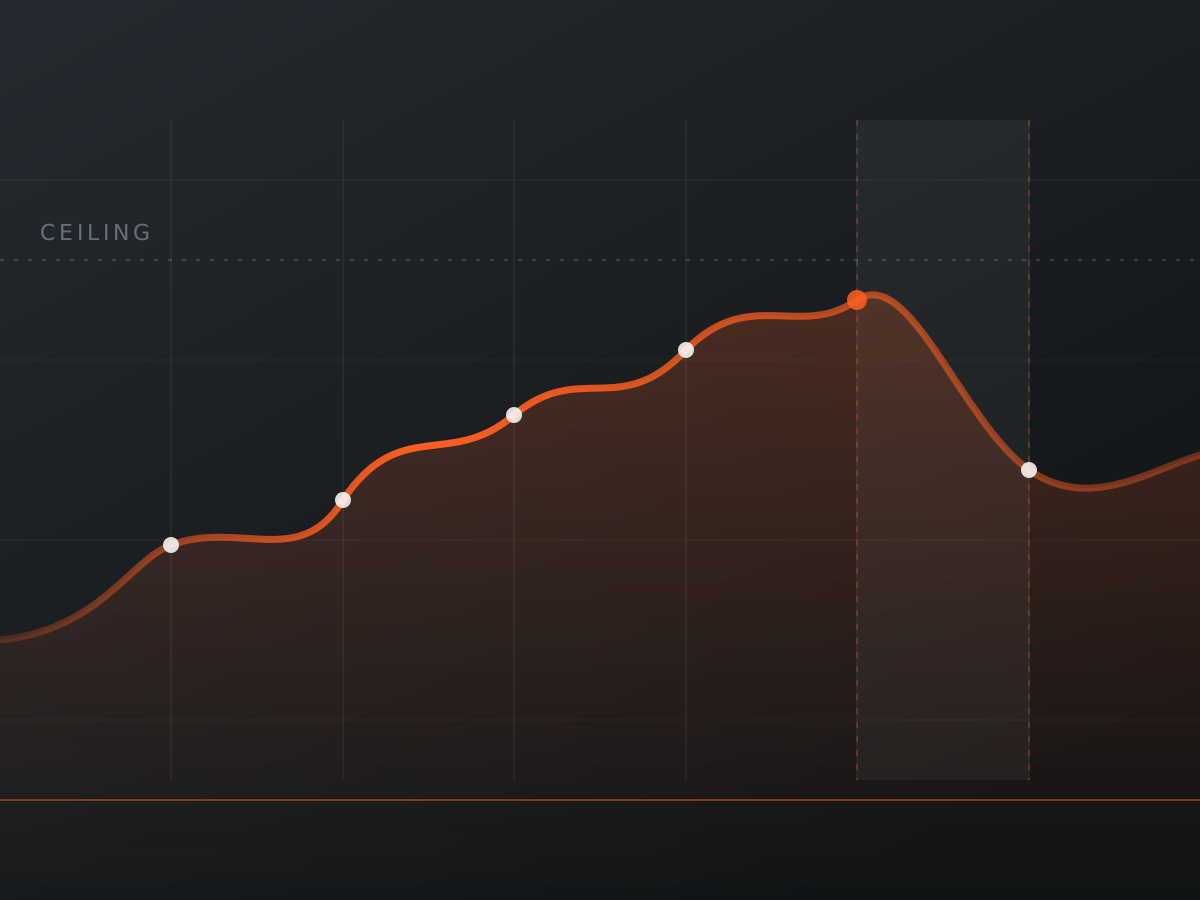
The session is the stimulus. The week is the training.
Adaptation happens between sessions, which makes recovery a programming variable rather than an afterthought. This path is about reading your own load — sleep, stress, soreness, appetite — and adjusting before the body forces the adjustment on you.
1week in 6
Planned deload
7day view
Load is read weekly
2RIR
Typical working margin
How this path is programmed.
Autoregulate, do not improvise
Every session has a written top set and a written floor. On a bad day you drop to the floor and still complete the session. The plan bends; it does not get abandoned.
Soreness is not a scoreboard
Delayed soreness tracks novelty, not stimulus. We measure with load, reps and bar speed, and treat "I could barely walk" as information about programme design, not as evidence of a good session.
Deload before you need it
Planned lighter weeks cost about four sessions a year. An injury costs six to twelve weeks. The arithmetic has never been close.
You will notice it here first.
- You finish sessions believing you could have done one more set.
- Sleep and training stop competing with each other.
- A missed week stops feeling like starting over.
Start with the screen, not the programme.
The assessment tells us whether Feel is actually your first block — sometimes it is not, and we would rather find that out in ninety minutes than in twelve weeks.